By PROF. AURELIO AGCAOILI
www.nordis.net
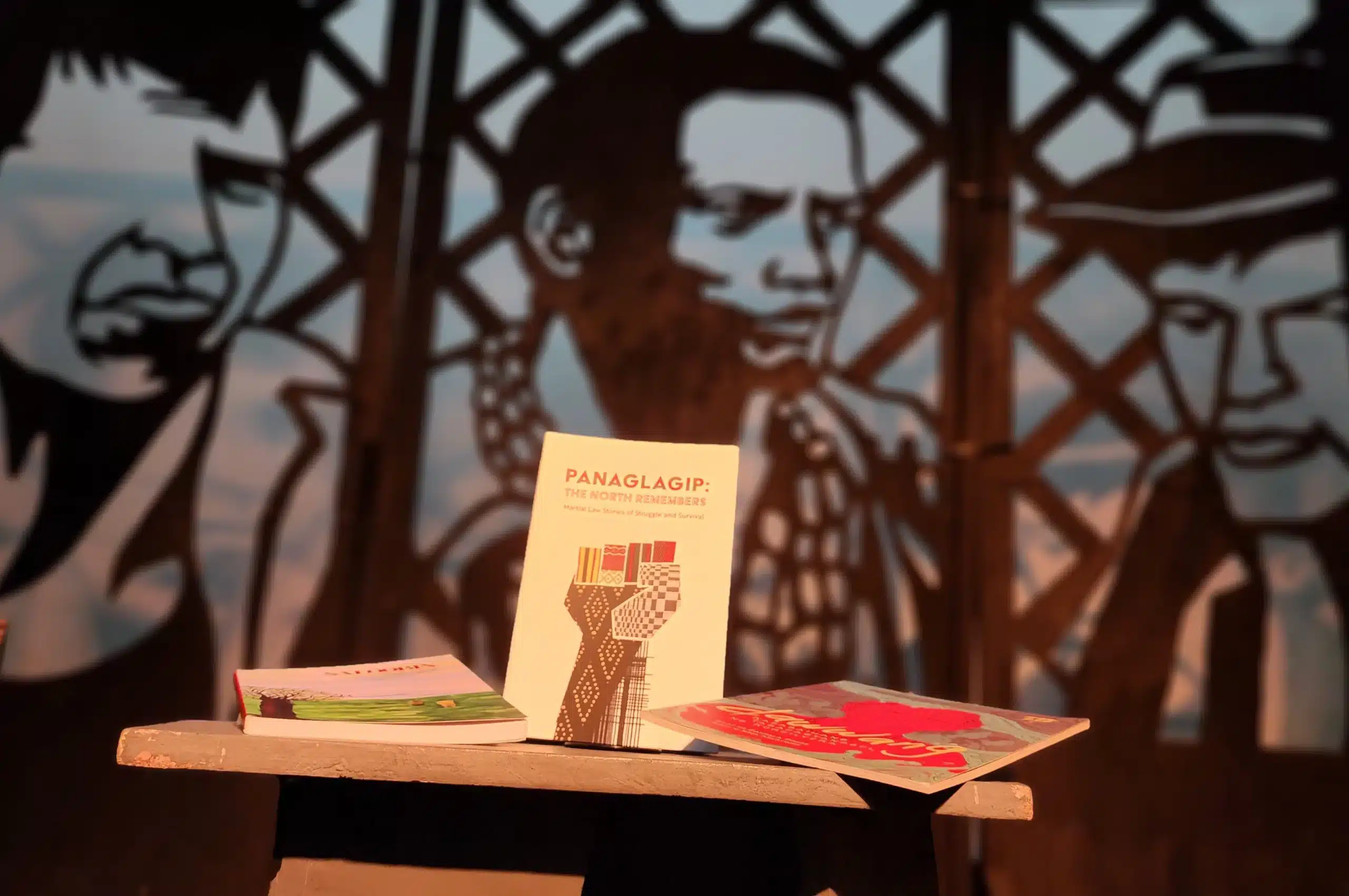
Editor’s note: This is a review of Prof. Aurelio Agcaoili of the book Panaglagip: The North Remembers. He is a faculty of the Indo-Pacific Languages and Literature and Program Coordinator for Ilokano at the University of Hawaii. Tinay Palabay, Karapatan secretary general and his former student at the University of the Philippines Diliman, read the piece during the February 23 book launch at the Bantayog ng mga Bayani auditorium.
Let me start by thanking Tinay Palabay for asking me to say something about this masterpiece of memory, Pananglagip: The North Remembers.
This book is redeeming. That is its virtue.
And it is redeeming because it provides us with something we can now hold onto.
It is a testament that combats the illusion that the people of the North—the umili of the Amianan—have lost their minds and that now, they only must believe in the false promises of those who have been trained all their life to fool every one of us.
There is gold here in this book.
But it is not Tallano’s gold.
It is our people’s.
*** *** ***
This anthology of memory, both persistent and not, is prima facie evidence of what happened to us in the Amianan, and more essentially, to the country.
The pursuit of freedom and the good life, away from the corruption of onions and rice and all the produce our farmers have been coaxing from the earth, does not have borders.
And so, we see the Amianan—the Cagayan Valley, the Cordilleras, and the Ilocos—moving, the earth in this part of the country so mobile so that we can see in the Cordillera the Ilocos, the Ilocos in the Valley up east, and the Valley both in the mountains and in the depressed lands that lead to the laud, the sea.
We see in the stories—and the poems that are stories and the stories that are poems, too—this movement of activists whose resolve to do things right for our people was, and continues to be, our redeeming grace.
That resolve keeps on burning in this book.
We are the beneficiaries of that resolve.
Through the sacrifice of these twenty-two writers of Pananglagip, we still have a country that remembers, a land that has kept the blood of those who gave that ultimate gift to our people.
*** *** ***
In the Summer of 2022, I had the chance to visit the shrine of Apo Macliing Dulag.
That shrine was vandalized.
Having read the book, I now think the vandals need this book that our poets and storytellers have fixed on the page.
This book reminds the vandals: Apo Macliing has remained with us and among us.
The struggle has not been won, one fact the vandals do not understand.
For this is what we need the most today: a remembrance of the things that have happened to us, all the things that have brutalized our sense of self, murdered our dreams, and stolen our songs and simple joys.
Fifty years of that obnoxious rule will continue to haunt us.
There will be no end to the haunting.
But the gift of remembering and naming those things that have decided to become some ghostly presence in our everyday lives today as this Pananglagip has done will inaugurate some healing for us all.
There is logic to the facticity that in despotic regimes, the first to go to prison is the poet, the artist, the storyteller, the activist, and the visionary of freedom.
These are truth-tellers, these people.
These are the same people, these authors whose testimony will dwell in our souls, who do not believe in big lies, in promises that are mystifications, in deliverance but only to themselves, never to the masses.
These accounts remind us that twenty-two of our best brains did not stand on the wayside and kibitzed.
Instead, like every revolutionary that is at the same time a prophet, they reminded us that freedom is the same for all.
And it must be so.
They caused us to remember that the good life is the same for all.
And it must be so.
Like all the testaments we have read from those who have lost life and limb or those who have been beaten and imprisoned by those trained to beat and imprison dissidents, I fully agree with the thesis of this work: that the actual North remembers.
It is the North of our ancestors, we people of the Amianan.
It is not the North of those whose only reason to exist is to tinker with the truth of our country’s soul.
The North remembers the contour of our dream for something better, and it is better because it is grander, freeing, and liberating.
It is not the North that some people say is solid, and it is solid because it delivers the votes for political families that have nine lives.
This is the North that tells the truth, the North that can sing about wayawaya, that freedom that has eluded us for so long.
I doff off my buri hat to these writers.
I am grateful for their gift of memory so we can continue to resist forgetting.
I doff my hat off because I am envious: I do not have their courage.
I can only pray: amin koma.
We can only wish that we are like them.
We can also wish we had been imbued with that love for our country and people.
I am certain that after reading Pananglagip, we shall be able to reconnect with all our ancestors, who since colonial times had been fighting for our freedom.
To all our writers, thank you.
And to all three publishers working together to make us reject the falsities of our past-as-present, agyamanak iti nagan dagiti amin umili iti Amianan: thank you in the name of all the people of the North, the real North.
Naimbag a kanitoyo amin. Balligi ti umay koma bumalay kadatayo amin. # nordis.net