It was one of those rare moments of clarity, or one when one’s view of the world suddenly comes into complete focus. In my mind, I, of course, knew that this happens all the time, in one shape or another, in places both seen and unseen.
I only even saw the aftermath. But some of us were there, in that exact moment when bullets rained on the farmworkers of Hacienda Luisita on November 16, 2004. In the event’s wake, I did see the slippers and stones scattered across the bloodied picket grounds, mingled with splintered placards and torn clothing. Even days after the violence, the site pulsed with tension. Even after the violence, it was an image that still shapes how I process the stories I write as a journalist: to understand, you have to see, feel, and listen.
You probably know the outlines of what happened. On November 16, 2004, seven farmworkers were gunned down. They were strikers, demanding little more than a livable wage — more than the P9.50 they earned for the grueling work of tilling the land, cultivating fields, and harvesting sugarcane. For ten days, they had held their ground, defying the Department of Labor and Employment’s “return to work” order, the deployment of police and military personnel, and the intensified efforts of Hacienda Luisita Inc. and Central Azucarera de Tarlac to break their picket line.
The confrontation escalated quickly. The guards behind the sugar mill gates lobbed tear gas at the strikers, who covered their faces with shirts and threw the canisters back. The workers were defiant, a resistance that must have seemed terrifying from behind those gates. Then came the gunfire.
The shooting lasted about an hour. Seven bodies fell that day. But witnesses claim the actual death toll was higher—more than seven had died.
The massacre sparked national outrage, amplified by journalists who documented the tragedy as it unfolded. Among them were Rene Dilan of The Manila Times and independent filmmakers Niño Tagaro and Jun Resurreccion, whose photos and videos revealed the chaos, bloodshed, and the haunting face of a farmworker taking his last breath.
I arrived a few days later, visiting the wake where the seven martyrs lay in caskets at the Tarlac City Plaza. From there, my colleagues and I ventured to Ground Zero, still littered with the remnants of the massacre. We interviewed witnesses in nearby barangays, most of whom spoke in hushed tones and requested anonymity. They insisted on one thing: more than seven people had been killed.
During those days, rumors began to surface. One story claimed that tear gas lobbed at the picket line had reached a “kubol,” or makeshift shelter, suffocating the infant child of a sacada, one of the seasonal sugarcane workers brought in from far-off provinces. Enraged, the child’s father reportedly charged at the guards or soldiers and was shot dead.
There was no official record of this incident. No child or sacada was among the bodies displayed at the plaza. But the rumors persisted.
To investigate, my colleagues and I discreetly sought out the sacadas. A few inquiries led us to a remote barracks deep within the sugarcane fields. These were not typical workers’ quarters but makeshift shelters that housed seasonal laborers brought from the Visayas and Mindanao to cut costs. Most sacadas had already been sent home after the massacre, but some remained to wait for their bosses’ order to finish the grueling work of harvesting sugarcane under the shadow of violence.
We arrived late in the afternoon. The shelter was cramped, a narrow barracks with crude partitions offering little privacy. About 50 sacadas lived there, eking out an existence. As the sun set, they lit gas lamps. The barracks, of course, had no electricity. At the entrance, I noticed small parols, Christmas lanterns crafted from sugarcane scraps.
One of the sacadas, Melchor, a 24-year-old father of four from Bais City, spoke to me in whispers. He could not afford to bring his family to Tarlac, and even sending money home was impossible. “I miss my family,” he said, “but there’s nothing I can send them.”
Melchor showed me his payslip. For a week’s work in October, harvesting over five tons of sugarcane, he earned P502.20. But deductions from the contractor left him with only P334.80—and from that, the cost of food rations was subtracted. It was a cruel system, trapping the sacadas in debt and despair.
The sacadas claimed they knew little of the massacre or the rumored deaths. Their lives revolved around survival, confined to their decrepit shelter. As darkness fell and the wind turned cold, we left the barracks. It was nearing Christmas, but joy was nowhere to be found.
In the weeks and months that followed, the story of the infant and father lingered in my mind, an unverified tragedy lost in the chaos. Yet it seemed emblematic of the broader violence inflicted upon the land and its people.
After the massacre, the killings continued. The Aglipayan priest William Tadena, Bishop Alberto Ramento, and peasant leader Marcelino Beltran were among those murdered in the years that followed.
For me, Luisita remains a harbinger of the country’s larger tragedies — a place where the brutal dynamics of power, labor, and resistance collided, leaving scars that still ache two decades later.
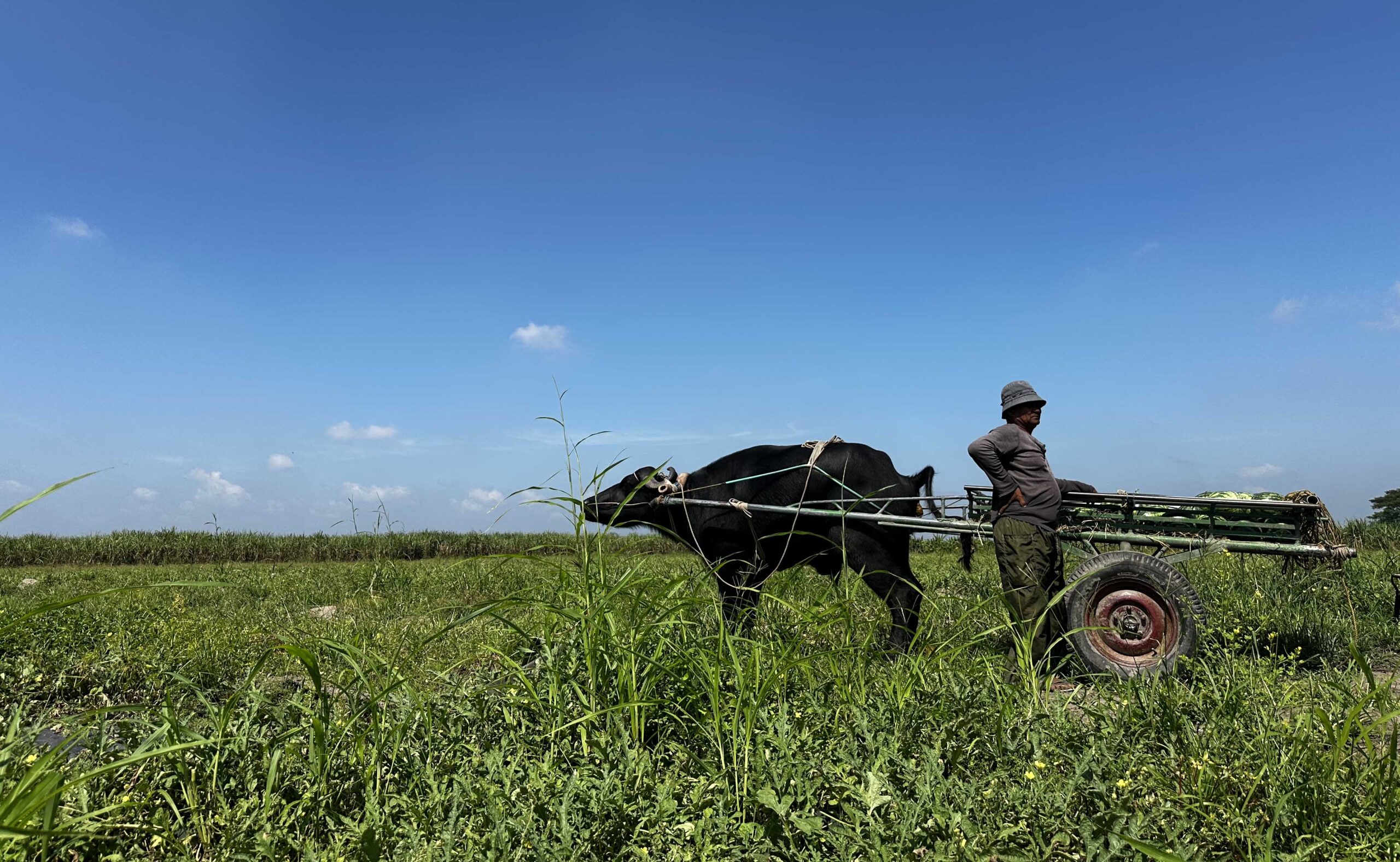
Over the years, I found myself returning to Hacienda Luisita, drawn by the shifting contours of its struggle. In 2008, there was a tentative sense of relief among the people. The picket line still stood, with banners demanding justice fluttering in the same ground where blood was spilled. But alongside these reminders of tragedy, life had quietly begun to reclaim its place. The strikers were now tilling the soil, planting vegetables and even palay on fields once dominated by unyielding rows of sugarcane. To see palay swaying gently in the breeze where sugarcane had once towered was disorienting, yet profoundly hopeful.
I returned again in 2011, when the “bungkalan” movement — the collective farming initiative — had expanded, encouraged by a landmark Supreme Court decision ordering the land’s distribution to the rightful owners. For the first time, I saw tractors in aid of labor in this backward agricultural land. I saw donations pour in for the farmworkers, allowing them to acquire equipment to improve their harvests. The land, once a symbol of oppression, was beginning to yield the fruits of freedom.
But freedom, it seemed, was an illusion. The victories of bungkalan were soon met with backlash. As my return to the hacienda became less and less frequent, busy as I became with other coverage, I only got to hear stories about large portions of Luisita being parcelled off to commercial interests, in violation of the high court order. And the farmworkers, once again, were target of escalating violence. Attacks on bungkalan sites became disturbingly common, and the reemergence of military forces in the barangays cast a long shadow over the newfound hope. The land, once vibrant with the promise of renewal, was again cloaked in darkness. The struggle that had spanned decades seemed poised to begin anew, as the people of Luisita braced themselves for yet another chapter of turmoil. Once again, this soil nurtured by resident farmworkers and visiting sacadas for generations, became steeped in both hope and heartbreak.