
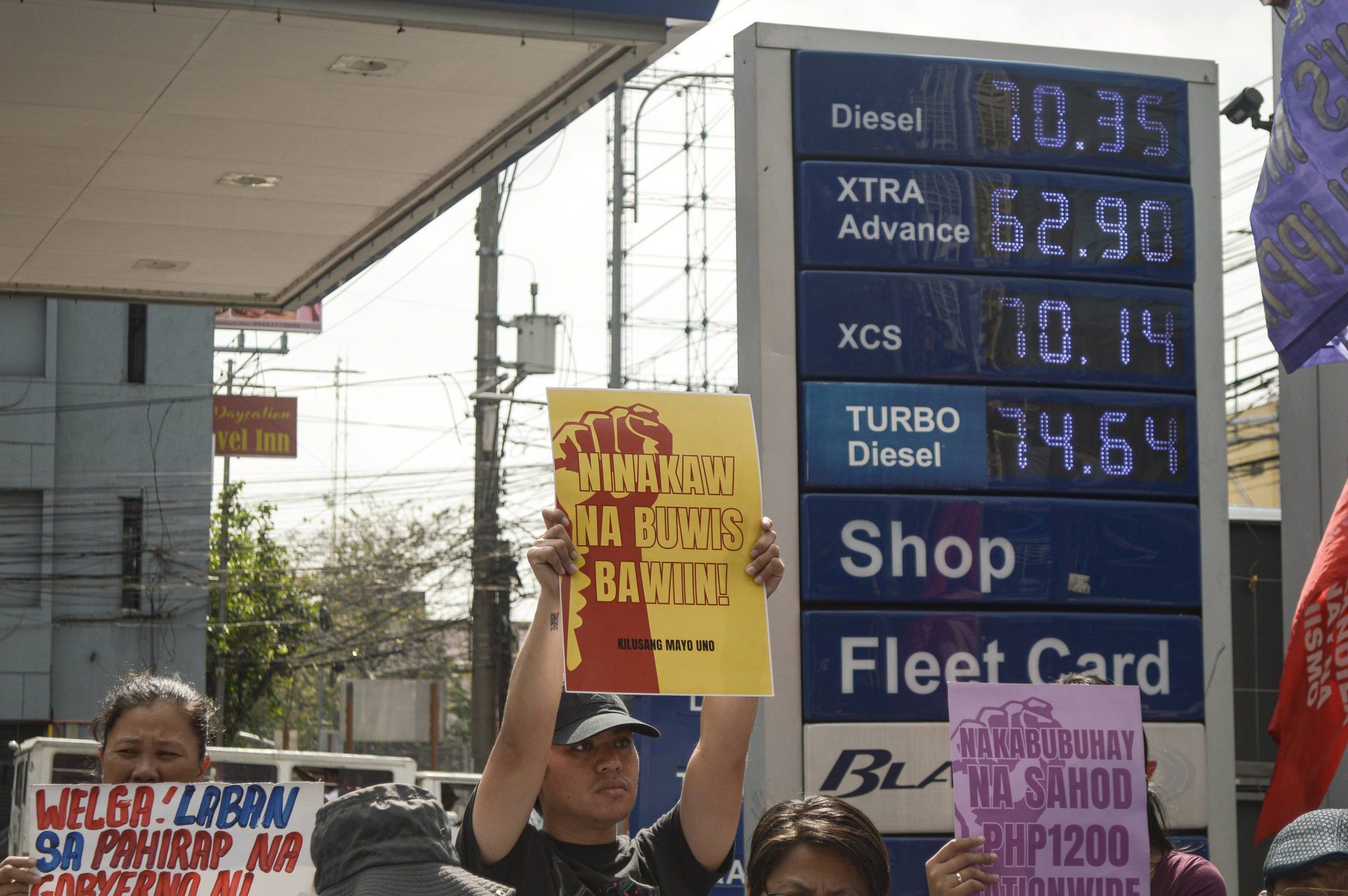
San Carlos Bishop Gerardo Alminaza warned that escalating conflict in West Asia could worsen economic hardship for Filipinos, as rising oil prices worsened by oil speculation ripple through global energy markets.
In a pastoral statement, Alminaza said the tension caused by the military aggression of the United States and Israel against Iran highlights deeper structural problems tied to global fossil fuel dependence.
“War in a region already scarred by decades of armed conflict is an unjust assault on human dignity,” Alminaza said, warning that such violence “weakens the moral foundations of the international order and undermines the primacy of diplomacy and dialogue.”
He said the crisis threatens civilians across the region, including migrant workers. “Civilians always pay the highest price,” the statement said, noting that overseas Filipino workers “now face uncertainty, fear, and possible displacement.”
Alminaza also pointed to the deeper role of fossil fuels in shaping geopolitical tensions. “This crisis also reveals a deeper and often ignored reality: the fossil fuel economy continues to shape geopolitical conflict,” he said.
For countries such as the Philippines, dependence on imported fossil fuels leaves the economy vulnerable to global conflicts and market shocks.
“When oil becomes entangled with war, the consequences ripple across the world— especially for vulnerable economies like the Philippines,” the prelate said.
The bishop warned that rising oil prices quickly translate into hardship for ordinary citizens. “For Filipino families, rising oil prices mean immediate hardship: higher transport fares, rising food costs, increasing electricity bills, and deeper economic insecurity,” he said.
Alminaza said the crisis should serve as a wake-up call for governments to accelerate the shift toward renewable energy. “Renewable energy is a peace strategy, a justice strategy, and a national survival strategy and not simply a solution to the climate crisis.”
He warned that continuing investments in fossil fuel infrastructure would prolong both climate destruction and geopolitical instability. “We cannot continue investing in a system that fuels both climate destruction and conflict,” the statement said. “Peace is built on justice. And justice today demands an energy conversion.”
Transport group warns of oil price shock
Alminaza issued the statement days after transport group Piston condemned the US-Israeli military attacks on Iran and warned that big oil companies can take advantage of the conflict and result in severe oil price increases.
Piston said the Philippines’ reliance on imported fuel leaves the country highly exposed to global supply disruptions.
According to the group, “Every $10 increase in global crude prices translates to an additional P2.50 to P4.00 per liter at local pumps, a burden that deregulated oil companies automatically pass on to consumers while the government remains powerless due to three decades of neoliberal privatization policies brought by the oil deregulation law.”The group also raised concerns about the potential impact on overseas Filipino workers in West Asia. “The potential loss of $500 million in income over six months, combined with oil shock inflation that costs the poorest 10% of households nearly three percent of their incomes, creates domestic volatility intimately connected to imperialist war mechanisms overseas,” Piston said.