
While investigating the elements that led to the arrest—now lasting over five years—of Philippine journalist Frenchie Mae Cumpio, Reporters Without Borders (RSF) discovered a file riddled with inconsistencies—so numerous that it’s difficult to understand how such flaws could justify her prolonged detention or be accepted in court. The investigative journalist is currently on trial for the bogus charges of “illegal possession of firearms” and “financing of terrorism.”
If one symbol were to be chosen from the hundreds of pages in the case file against Frenchie Mae Cumpio—accessed by RSF—it would likely be a photo. Taken by the judicial police during her arrest on the night of February 7, 2020, it shows an officer pretending to discover a flag of the Communist Party of the Philippines (CPP), a .45-caliber pistol, and a fragmentation grenade placed on the young woman’s single bed. Strange company for the night. It was two in the morning. A few minutes earlier, police had awakened the executive director of Eastern Vista, a community online media outlet, and her roommate by breaking down their apartment door to conduct a search. “Even real guerrillas don’t sleep with guns and explosives under their pillows,” jokes a journalist who knows Frenchie Mae Cumpio well.
Met by RSF on July 11 in Tacloban Prison—the main city in Eastern Visayas, one of the country’s poorest regions—the journalist recalls “screaming” when she saw the items placed on her bed during the police search. She believes the evidence was clearly planted. Given how crudely it was staged, it’s hard to see it any other way. Yet it’s far from the only fabrication by the prosecution, as RSF discovered during its investigation…
“The clumsiness with which the charges were built—and sometimes fabricated—against this young journalist is shocking. From dubious police methods to testimonies riddled with inconsistencies, this investigation exposes the emptiness of the accusations and the total impunity of those who brought the charges, without even attempting to be credible. As the court prepares to make its decision in the coming months, it is unthinkable that such troubling facts could lead to anything other than her acquittal and release."
Arnaud Froger
Head of RSF’s Investigation desk
After more than five years in pre-trial detention, 26-year-old Frenchie Mae Cumpio has recently appeared before the regional court in Tacloban. She is charged with “illegal possession of firearms” and “financing terrorism,” and faces up to 40 years in prison. A decision is expected in the coming months.
“This is a poorly built case,” says a human rights expert who requested anonymity. “It’s characteristic of red-tagging”—a practice in which civil society actors are portrayed as members of the Philippine Communist Party and its armed wing, the New People’s Army (NPA), both classified as terrorists, in order to discredit and target them.
Among the most controversial aspects of the case—described as a “parody of justice” by UN Special Rapporteur on Freedom of Expression Irene Khan—are two key witnesses whose statements alone would be enough to invalidate the entire case. Presented as former rebel defectors, they appear in several similar cases. Frenchie Mae Cumpio says she has never met them.
Marjie R. stated in her testimony that she handed over money and ammunition to Frenchie Mae Cumpio and her roommate in the presence of an NPA member in March 2019. No tangible evidence—no photo, message, or other testimony—supports these claims. Worse still, this key prosecution witness made incoherent or clearly false statements. In Cumpio’s case, she said she had contact with the journalist starting in 2016. But in another case where she is also a witness, she stated in a sworn statement reviewed by RSF that she began seeing the journalist regularly at meetings in Tacloban from 2008. Frenchie Mae Cumpio was nine years old at that time.
Alma G., whom RSF met in Manila, claimed she saw the journalist only once, in October 2016, surrounded by 30 armed men. No witness or document supports this account. When pressed, she clarified she had no contact with Frenchie Mae Cumpio after that date. However, in court on March 6, 2023, she stated under oath that she also saw the journalist in 2017, without providing further details.
During our interview, she said she testified to give judges “context” on the armed rebellion’s organization, even while accusing a journalist she eventually admitted she didn’t know.
The central role of these two women in the criminal case is even more troubling considering their backgrounds. Alma G. admitted to RSF that she was facing 17 court cases—mainly for murder—at the time of her arrest in June 2020. After a quick “repentance,” all those cases were dropped, and she became an active witness in several similar cases targeting civilians.
For her part, Marjie R. says she is under military protection—the same military suspected of being behind the persecution of Frenchie Mae Cumpio and her co-defendants.
Was it a trap to set up Frenchie Mae Cumpio?
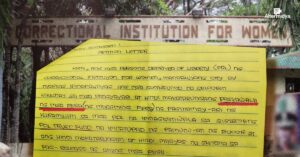
Two days before the raids that led to their arrests in February 2020, one of the co-accused, Alexander Abinguna—a human rights defender still in detention facility—raised concerns with the Philippine Human Rights Commission. In a letter seen by RSF, he requested the body conduct an “on-site inspection” of his organization’s offices to confirm that no illegal items were present.
Sensing a threat, he also posted a sign on his office door: “Planting evidence is prohibited here.” Frenchie Mae Cumpio, who was in regular contact with this activist, knew she was being targeted and had complained to those close to her about being under surveillance.
The surveillance account included in the court file is revealing. Conducted by the military starting in October 2019, it relies on statements from a mysterious “informant.” The journalist is described several times as carrying a weapon, yet she was never arrested or photographed. These are serious claims, but the surveillance is poorly documented.
Even more absurdly, the journalist is accused of taking part in two ambushes against soldiers in November of the same year, despite allegedly being closely followed. This glaring inconsistency is not addressed at all in the sworn statement of one of the military surveillance officers reviewed by RSF.
The army also reported seeing her on December 26, 2019, with Benito and Wilma Tiamzon—the former CPP-NPA chairman and secretary general—and Renato Baleros, a local insurgency figure. All were allegedly released because of the “Christmas truce.” How could the surveillance of a 21-year-old journalist take priority over the arrest of three of the country’s most wanted fugitives?
As for the apartment shared by the journalist and her roommate, it was described as a terrorist hideout. However, RSF found that it was located on a busy commercial street in Tacloban, just 50 meters from a police station…
To be continued: This article, “Investigation into a Fabricated Case Designed to Convict a Philippine Journalist,” is the first part of RSF’s exclusive investigation into the Frenchie Mae Cumpio case.