By IGGY LAMI-ING
www.nordis.net
SANTA, Ilocos Sur—Fisherfolk in this coastal town have observed a decline in their catch following dredging operations at the mouth of the Abra River.
“No mariribok dagiti tattao, mariribok met dagiti ikan isunga umadayoda. Bimmassit ti makalkalap mi idi adda dagita,” said a local fisher from Rancho, who requested anonymity on March 10.
(If residents get disturbed, the fish also get disturbed, so they move away. Our catch decreased when those [vessels] appeared.)
Rancho is among the villages dotting the inlet where the Abra River empties to the West Philippine Sea. Residents and fisherfolk believe the persistent noise from the vessels and relentless underwater excavation have severely affected their fishing grounds.
Besides the dwindling catch, Edward Pimentel said their catch smells and tastes like petroleum.
“No mapanak agkalap ket makaalanak ti pasaray tallo, uppat kilo tatta ket awan pay maysa, nu dadduma narigat pay ti medya… Awan pay halos masilawanen,” told Nordis on March 11.
His daily catch usually consists of fish, while his nighttime catch includes shrimp and mud crabs. He used to earn P1,000 to P1,500 from these but now barely reaches P300, hardly enough to cover his expenses.
“Ta awanda met ti mano nga tawen ket mayat met. Itatta met la nagsublida ket kasdiay manen,” Pimentel added.
(Everything was fine during the years they were gone. The problems only started again when they came back.)
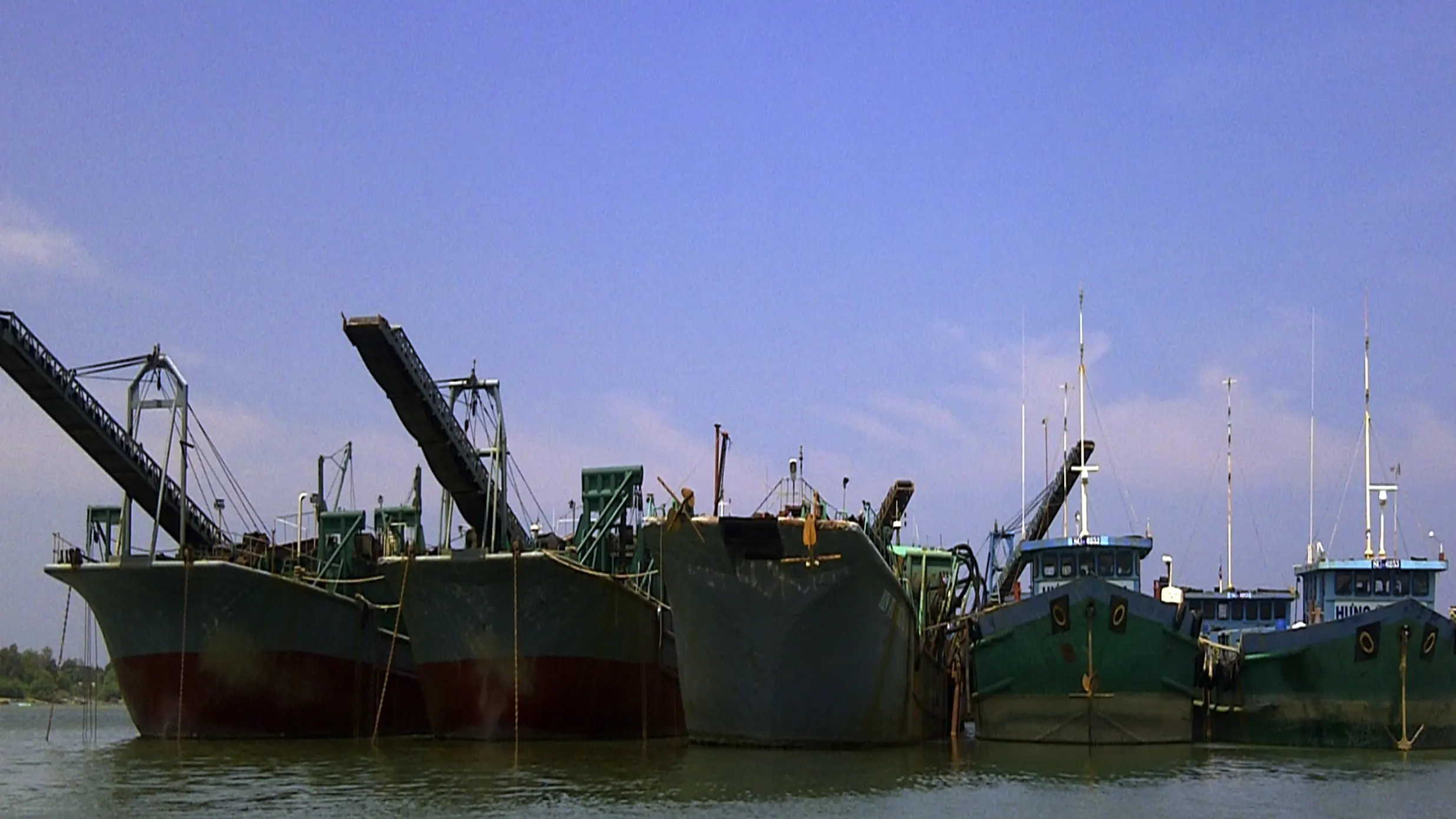
The fishers were referring to the dredgers and cargo barges operating in the waters between Santa and Caoayan since May 2024. Isla Verde Mining and Development Corporation, which the provincial government tasked with desilting the river, operates the vessels.
The provincial government has been pushing for the river’s dredging, securing an Environmental Compliance Certificate (ECC) for the project in June 2009.
Isla Verde was the same company the province was planning to tap for the desilting process, which initially commenced in 2013. However, allegations of black sand mining haunted the project. Protests from communities and civil society groups put the project on hiatus in 2015.
A 2015 book by the IBON Foundation and the Philippine Network for Food Security Programs found that magnetite extraction from rivers, estuaries, and foreshore areas disrupts sediments, increases water turbidity, and harms fishery resources and the entire marine ecosystem. Case studies covered Santa and Caoayan.
Mining allegations
Videos of the operation posted on Facebook have sparked concerns about black sand or magnetite mining, a type of iron ore. The issue prompted Mayor Jesus “Popoy” Bueno to order the Isla Verde barges to leave the town’s territorial waters on March 7.
“Dayta dredging naibaga nga inaprubaran ti probinsya idi napaayabankami (ti probinsya). Ngem daytoy makitkitami ngamin, kasla met lang diay black sand mining, isu met ti mauububrana isunga saanmi kayat dayta a mapaspasamak,” said Ronald Soriano, barangay captain of Dammay.
(The dredging was said to have been approved by the province when the province called us. But what we see looks more like black sand mining, that is what is happening, which is why we are against it.)
In a statement, Governor Jeremias Singson acknowledged residents’ concerns but assured them that no mining is taking place.
“After thorough investigation and validation by the Philippine Coast Guard, it has been conclusively established that the activities in question do not involve black sand mining,” he said.
The governor stated that “all activities, including the transfer of materials, were carried out in strict compliance with the terms and conditions” of the agreement between the province and the company. He further explained that the operation shown in the footage is part of a project “aimed at improving water flow and restoring silted river channels.”
Singson said the province will monitor all dredging activities to ensure compliance with environmental laws and regulations. He also vowed to investigate and address any reported violations.
The latest Mines and Geosciences Bureau (MGB) records show that Isla Verde Mining and Development Corporation holds a Mineral Processing Permit issued in April 2023 and a sand and gravel aggregates license approved in June 2024 in Caoayan.
A 2021 MGB Annual Report noted that Isla Verde conducted a test run of its processing facility in 2019, but no additional operations have been undertaken. Its ECC authorizes the plant to process up to 10 million MT of dredged aggregate materials annually. The bureau’s 2023 report also indicates that the company has the required documents for its sand and gravel operation.
Alternative measures
Soriano acknowledged the provincial government’s authority over the project. He said they would prefer to use the dredge materials to fill their embankments.
“No madredging man ditoy ayanmi, ti kayatmi diay batbato ket maipan ditoy ayanmi… isu ti kayat mi a mapasamak ket dayta ket ipanawda met,” he said.
(If there is dredging here in our area, we want the excavated materials to be dumped here… that’s what we want, instead of being taken elsewhere.)
The Coast Guard station in Ilocos Sur reported that the Isla Verde dredge vessels are transporting their loads to a reclamation area in Pasay City.
In a statement, the Ilocos Center for Research, Empowerment, and Development (ICRED), a non-government organization focused on disaster preparedness and response, expressed concern over the reported mining activities. It warned that such operations could further burden residents by threatening their livelihood and increasing their vulnerability to climate-related disasters.
ICRED executive director Florence Kang said the province should ensure “community-based solutions grounded in good science.”
“This means that concerned communities should have been consulted, and studies on the project’s impact on their livelihood and environment should have been presented to the residents,” he explained.
He also urged the provincial government to be more transparent, saying it should publicize the study on the Abra River dredging and its environmental impact assessment.#nordis.net/with reports from Sherwin De Vera