By SHERWIN DE VERA
www.nordis.net
TABUK CITY, Kalinga (Updated Nov. 5, 6:07 AM) — The fear of retaliation kept Jose and Pedro (not their real names) from telling their stories. It took a while and a few cups of coffee before they felt at ease to recall how the once-active people’s organization in their village almost disintegrated under pressure from the government’s campaign against communist rebels.
The two are members of Maluda, an organization of farmers in Barangay Limos, Pinukpuk, Kalinga. For years they worked with non-government organizations (NGOs) to provide for the community’s needs, rarely serviced by the government.
All of these changed when COVID-19 struck, and the government imposed the Luzon-wide lockdown. At the height of the pandemic, the 50th Infantry Battalion also intensified the implementation of the Armed Forces of the Philippines’ Community Support Program (CSP). Among the things the soldiers did were tag Maluda and its members as New People’s Army (NPA) sympathizers.
The AFP touts CSP as their main arsenal in clearing communities of rebel influence by identifying and dismantling the “politico-military structure” of the NPA. The program requires soldiers to immerse in the identified barangays where the presence of communist guerrillas is deemed significant to address the needs and concerns of the people.
Mutual help group
“Addan daytoy nga ubrami nga innabuyog uray pay awan ti NPA,” said 62-year-old Jose during an October 31 interview.
(We already practiced mutual help even before the NPA came.)
He said their mutual help system improved in the 1980s as inter-tribal unity flourished during the anti-Chico River dams struggle. But there was a brief hiatus following the massive military deployment in the 1990s under the administrations of Cory Aquino and Fidel Ramos.
Like today, soldiers asked them to clear their names. Some were forced to join the paramilitary Citizen Armed Force Geographical Unit.
Their innabuyog again became active in early 2000. In 2010, farmers held an assembly and transformed their mutual help system into a formal organization. They called the group Maluda, from the old name of their village.
“Babaen ti tulong dagiti NGOs adda dagiti farm tools para iti talon, daydiay ti rugrugi. Inggana insuroda nga irehistro iti [Department of Labor and Employment],” 42-year-old Pedro said.
(Through the help of NGOs, we got farm tools, which was the start. Then they taught us how to register with DOLE.)
“Adda pay ti mainom a danum ken irigasyon a nagbenisyo ti komunidad,” he added.
(We also had waterworks for home use and irrigation that benefited the community.)
Guilty by association
“Kuna dagiti military a masapol ipadalos ti naganmi, masapol a maawan ti Maluda ta daytoy kano ket adda ti silpona ti NPA,” recalled Jose.
(The military said we must clear our names and abolish Maluda because it is connected with the NPA.)
When he asked for proof of their allegation, the military cited Maluda’s affiliation with Timpuyog ti Mannalon ti Kalinga (TMK), an affiliate of Cordillera Peoples Alliance (CPA). The soldiers also alleged that projects from the Center for Development Programs in the Cordillera (CDPC) were NPA-initiated.
TMK and CPA were among the 18 organizations accused by the AFP as communist fronts during a House Committee on National Defense and Security hearing in November 2019. Meanwhile, posters scattered in Balbalan, the town adjacent to Pinukpuk, tagged CDPC as a communist front.
“Umay dagiti NGOs ditoy tapno ipatungpal ti projects saan nga aggawis nga ag-NPA. Saanda met nga ibaga a naggapu diay proyekto iti NPA,” he added.
(NGOs come here to implement projects, not to recruit NPA. They do not say the projects came from the NPA.)
They sought the intervention of the barangay, but instead of vouching for the organization, the local officials urged the members to accede to the military “tapno madalusanen ti Limos (so Limos will be cleared).”
“Masapol kano ta programa ngamin ti gobyerno ket masapol nga madalusan ti Limos, ta ngamin ket impluwensyado ti NPA,” Jose said.
(They told us that we need to because it is the government’s program, and we need to clear Limos, which is considered influenced by the NPA.)
He said many of their members opted to take the “oath of allegiance” to the government and sign a document that they were resigning from Maluda and repudiating TMK.
“Saan a naawan ti organisasyon ngem kaaduan kadagiti miembro ket mabutengda. Isu nga dagiti proyekto awanen, kumapkapoy ta sumagmamano kamin a mangituloy diay bayanihanmin,” said Jose.
(The organization remains, but most of our members got scared. Now only a few of us are participating in the project and our mutual help group.)
TMK Secretary General Eddie Baggay, who is also from Limos, said Maluda’s case is not an isolated incident. He said barangay and municipal farmers’ groups affiliated with TMK had a similar experience. He was appointed to the position in 2020 in the middle of the pandemic lockdown to replace the elected secretary general who died in 2019 and assist the chapter in their village.
“Ginundawayanda diay panawen ti lockdown tapno pairtengen ti pananglipit kadagiti POs. Iti dayta a panawen, saan met lang a makaresponde dagiti NGOs ken dagiti opisyal TMK tapno tumulong ta saanda makastrek kadagiti baryo,” Baggay added.
(They took advantage of the lockdown to intensify the persecution of [people’s organizations]. During this period, NGOs and TMK could not respond to their request for assistance because we were not allowed to enter the towns or barangays.)
As of October 2022, Baggay said 27 percent of their affiliates became inactive since the military started CSP in Kalinga in 2020.
Success?
By September 2020, the CSP seems to have gained ground in Pinukpuk, with barangays Baay, Apatan, and Limos holding a series of “walk for peace.” In the Third Quarter Meeting of the Provincial Task Force to End Local Communist Armed Conflict Limos was identified among the 17 barangays that received various program and projects funded by the national government. These include farm-to-market roads, forest protection, livelihood assistance, intelligence-driven internal security operation, information dissemination, and assistance to municipal projects.
By October, the Department of Agriculture was holding community consultations on the Special Area for Agricultural Development Program, which includes “organizing partner people’s organizations.” Limos was one of the beneficiaries, with 157 farmers participating in the activity.
In 2022, Limos was among the recipient of the Barangay Development Program (BDP) in Pinukpuk. The village is set to get P4 million from the national government – P1.5 million is allotted for the improvement of the water system in two sitios and P2.5 million for constructing a barangay health station.
A program of the National Task Force to End Local Communist Armed Conflict, the BDP relies on the CSP to determine whether a barangay can be declared free from the NPA’s sway.
According to NTF-ELCAC’s website: “The BDP is directed to the sustainable rehabilitation and development of 822 barangays formerly established as guerilla fronts of the CPP-NPA-NDF. Each barangay is provided with 20 million pesos each for their respective projects, for a total of 16.44 billion pesos allocated funding.”
The anti-communist body, known for red-tagging progressive groups and government critics, proposed a P10-billion budget for BDP under the 2023 National Expenditure Program, almost double the P5.62 billion allotted in the 2022 General Appropriations Act.
Curtailing grassroots participation
CDPC Executive Director Rhoda Dalang said Maluda’s experience shows how red-tagging curtails people’s participation, especially in rural areas.
“It is unfortunate that [because of this], people’s organizations have become hesitant in social and virtual platforms of airing grievances and even sharing best practice,” she said in a text message on November 3.
According to her, “development work and services remain well-accepted and pursued in communities despite allegations against NGOs like TMK and CDPC.” However, many of their local partners “chose to remain silent on the issue but accept projects and find ways to perform their part.”
“An obvious reason is the millions of funds dangled by the NTF-ELCAC. Many want the fund and would rather support initiatives to have their barangays ‘cleared’ than stand up for local organizations,” Dalang added.
Postscript
Almost two years after the “walk for peace” in Limos, signaling the success in ridding the village of NPA influence and their alleged front organizations and throve of government support, problems still beset the farmers.
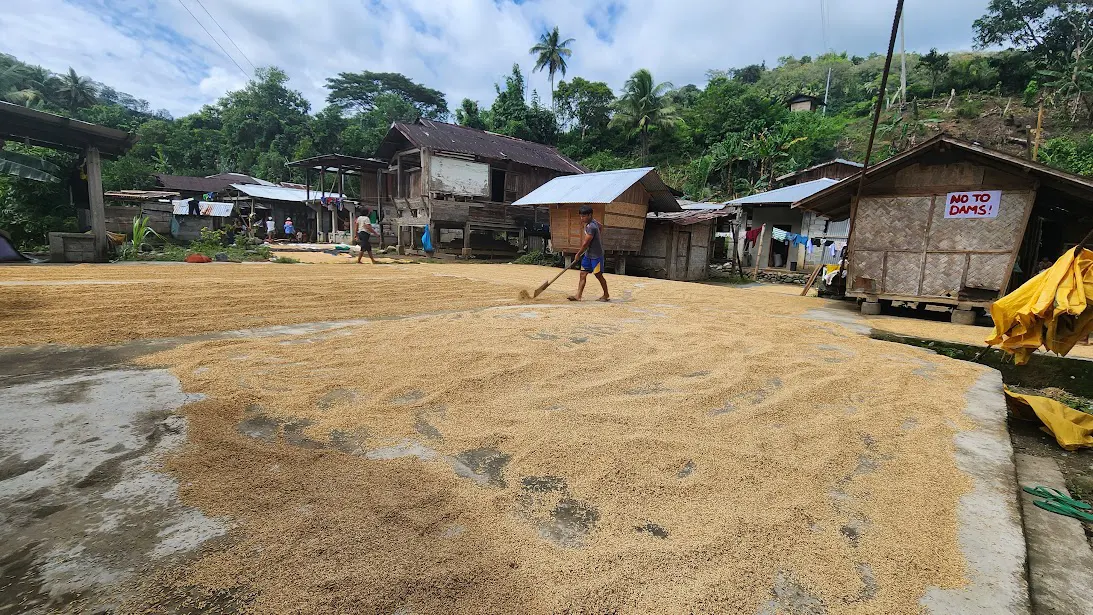
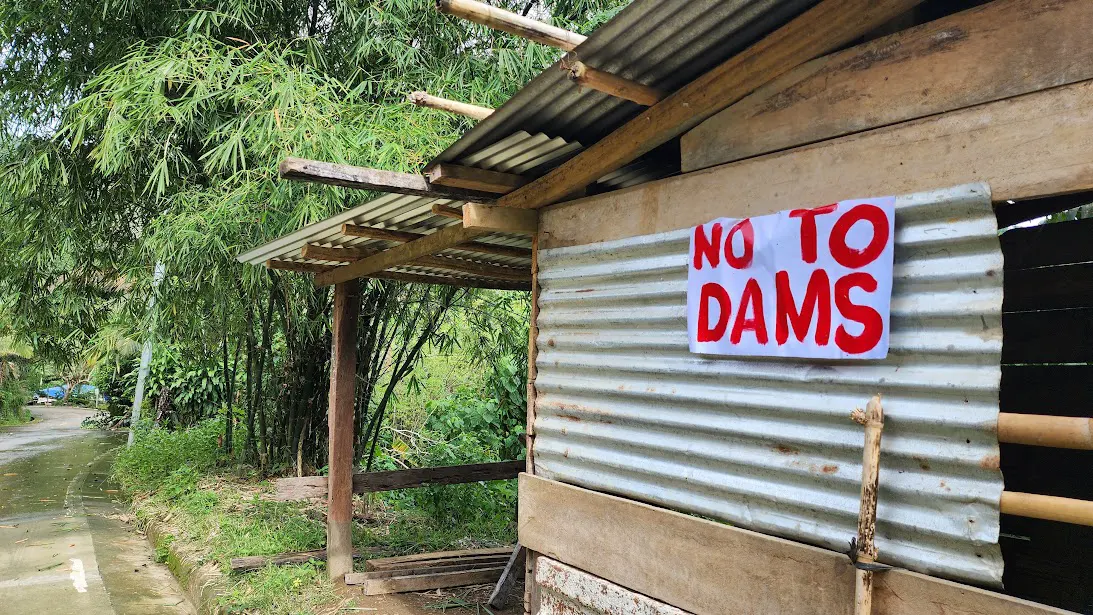
Last August, Limos hosted an intertribal assembly. The participants forged a declaration against the proposed Saltan D and E hydropower dams. The Limos tribe, composed of eight barangays, was supposed to decide on August 27 for Saltan E, but the activity was canceled.
In September, Maluda wrote CDPC to ask for assistance.
“Dawaton mi dit nadayaw on opisina yo ta ituloy na kuma dit nabalu on sisinnakgat tayo para dit pumiyaan. Sapay kuma ta makaanap kayo si naan-anay para si assistance wenno pundo tapnu awad mausar tako on mangsukisok si alternatibo on mang-kontrol si daton dakol on parikot mi on mannalon on epekto daton pesti daton mulmula siton igaw mi,” the letter said.
(We ask that your honorable office to continue our cooperation for the people’s welfare. We hope you can help us find research funding for alternative pest control to solve our problem.)
The group said prices of commercial pesticides and fertilizers have become prohibitive. They also asked the institution to assist them in researching how to improve their production.
“Awad kuma tumulong kandakami on mangwa si panag-research wenno sukisok si daton awada mula kan kaykayo siton lugar mi a mausar para si panag-padur-as si ton pangkabiagan kan mangsalwad siton aglawlaw,” Maluda stated.
(We hope you can help us research the plants and trees in our locality that we can use to improve our livelihood and protect our environment.) # nordis.net