By Alexandra S. Demaisip
Content warning: This article mentions suicide.
According to 2022 Philippine Statistics Authority (PSA) data, 80% of suicide deaths in the country are among men, and in 2024, it found that men aged 15 to 29 years old are “four times more likely to die by suicide compared to women.”
The World Health Organization (WHO) Philippines echoed these findings to flag the growing trend of suicide deaths among Filipino men who “face a greater burden than others.”
Marie Felipe, deputy director of the learning and development committee of MentalHealthPH, a non-profit mental health organization, said that available data “can help” push for better mental health services for vulnerable groups, but the current trend for males is “still alarming.”
Felipe cautioned that suicide is “multifactorial and complex,” explaining that there is a lot to take into account as to why groups such as the male population are more vulnerable to mental health issues and suicide.
Under pressure
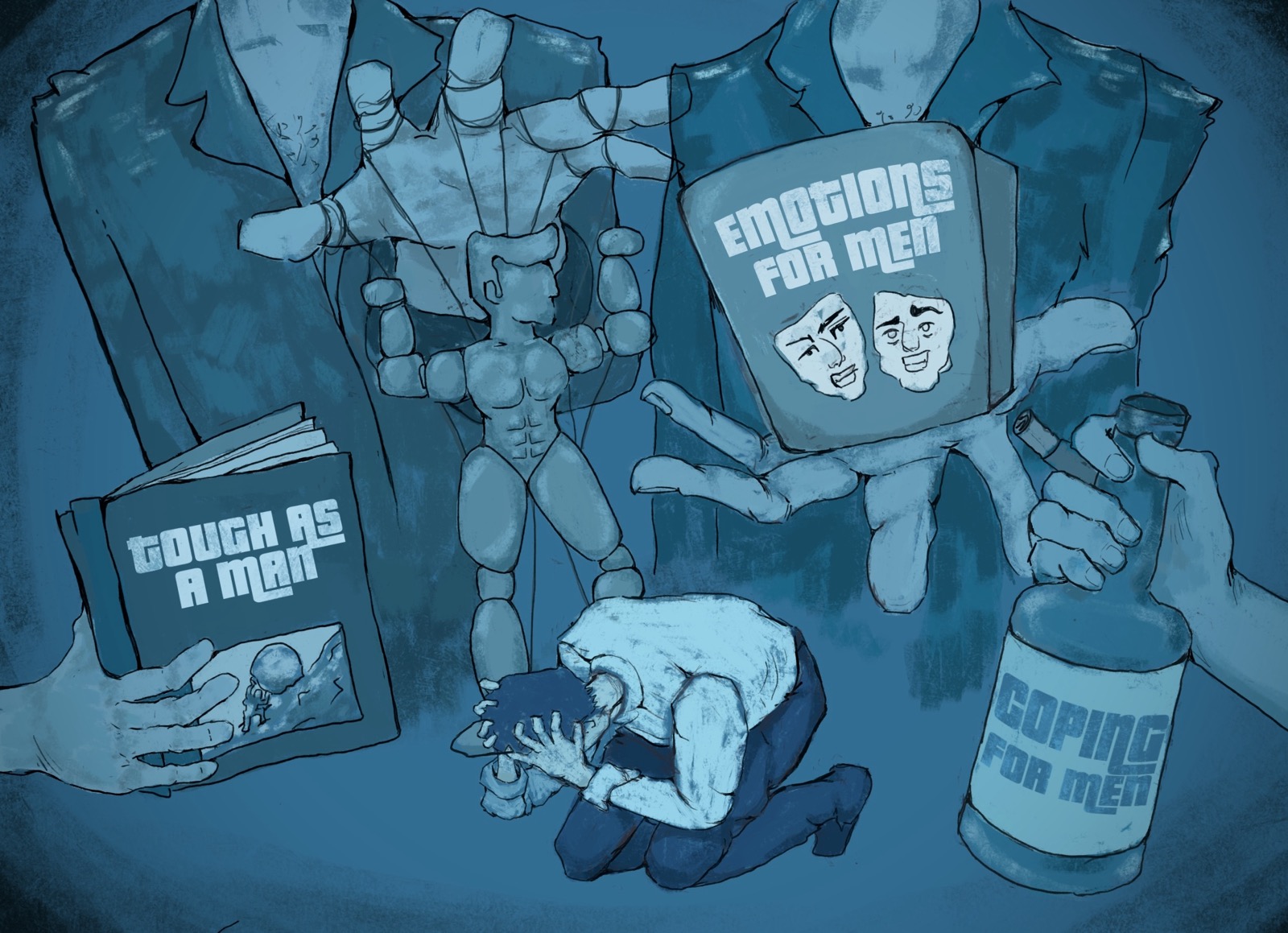
According to Czarina Joy Balbuena, an instructor at the University of Santo Tomas Department of Psychology, hegemonic masculinity is a cultural phenomenon in the Philippines that “demands men to be strong and emotionally stoic individuals,” which results in undue pressure to push through the pain.
“As a result, many men externalize their distress through behavioral dysregulation instead of asking for help, which is perceived as “unmasculine”. Consequently, men are more prone to alcohol misuse, isolation behaviors, and aggressive behaviors that can be misconstrued as mere lifestyle choices. Ultimately, this suppression of distress often leads to the use of more lethal methods during a crisis,” Balbuena said.
In 2021, the Department of Health (DOH) surveyed 3,087 Filipino adults and found that “alcohol use is higher in men compared to women,” with 51.4 percent of men and 28.9 percent of women reporting current drinking use of six drinks or more in a single session.
Balbuena also noted the Filipino value of “pagtitiis” as a factor in emotional suppression among males, and said that “suffering in silence should not be conflated with genuine resilience, as it is an indication of real psychological distress that requires active support.”
She also noted that instead of welcoming conversations on mental well-being, male friend groups are often “socially conditioned to respond” to emotions of sadness and struggle “with ridicule.”
“Although it is not as severe as before, they are sometimes still met with remarks like “ang lambot” or “ang bakla,” which introduces an additional layer of psychological risk for young gay men that must be addressed,” Balbuena said.
Mental health organization volunteers also see remarks like these as risks to the mental well-being and upbringing of young boys.
Felipe pointed out that expectations on male strength are already embedded in the language or words we use to describe them.
“It’s just that there’s a lot of stigma that goes around mental health, more so with men. Even if you look at how the words we use, there’s “man-up,” right? It already shows that you always need to show strength when you’re a man,” Felipe said.
For youth-led and non-profit mental health organization Talang Dalisay co-founder Macy Castañeda-Lee, young boys are “already struggling with toxic masculinity, which prompts for more accessible mental health services for those battling with the stigma.”
“Evidence suggests that social norms, stigma around help-seeking, and limited access to timely mental health care can make it harder to get the support they need,” WHO Philippines said.
It emphasized that “understanding who is most affected can help shape more targeted prevention efforts, from promoting life skills and emotional well-being among young people to community-based mental health services, early detection, and access to care.”
Though there is a need for accessible mental health care in the country, out-of-pocket expenses for therapy and diagnosis from government and private health institutions are still a “financial burden,” according to Balbuena.
She said that “young people experiencing suicidal ideation ideally avoid confiding in their parents or guardians for fear of being judged or reprimanded. They do not want to be seen as a burden to their families in many ways, including the cost of seeking help and the time and resources required to recover.”
Therapy rates in Metro Manila private clinics cost an estimated amount of 1,000 to 5,000 pesos per session.
While PhilHealth offers mental health benefits with an annual financial coverage of 9,000 pesos for general services, specialized care that offers 16,000 pesos coverage is only accessible in level two and three hospitals nationwide.
These hospitals have psychiatrists, psychologists, and neurologists, and the equipment for diagnosis and therapy. But according to PhilHealth’s 2025 accreditation figures, level two and level three hospitals account for only 22% and 6% of the 812 government and 1,111 private hospitals in the country.
For Felipe, financially covering the mental health expenses of vulnerable Filipinos is a major part of “prioritizing mental health.”
“Expanded coverage, therapy sessions, consultations, and assessments for mental health could be covered or at least partially covered. But not everything is like that,” Felipe said.
Ill-equipped
In 2021, WHO found that the Philippines has only 548 psychiatrists and 133 psychologists serving a country of over 110 million people. This translates to an estimate of one psychiatrist for every 200,000 Filipinos and one psychologist for every 827,000.
This tally falls behind WHO’s recommended ratio of 10 psychiatrists per 100,000 people and one psychologist per 5,000 people in a country.
Acting health secretary Edwin Mercado said that “low compensation” drives the lack of mental health professionals in the country during the department’s House of Representatives appropriations committee hearing last Sept. 2, 2026.
According to Executive Order No. 64’s 2026 schedule, government psychologists and psychiatrists are paid 53,818 to 57,842 pesos and 66,052 to 72,671 pesos a month. However, Mercado said that this remains “not substantial,” despite the 24 percent increase from the previous salary grade of 40,000 to 55,000 pesos.
Kabataan Rep. Renee Co pointed out the 311.49 million peso 2027 budget cut for the National Center for Mental Health’s maintenance and other operating expenses (MOOE) during the committee hearing.
Co stated that despite the “push in legislation” to establish more community-based mental health services, “the national health budget has been reduced by half and to smaller allocations every year since 2025.”
“Ang concern po natin ay ang paulit-ulit na statistics na kulang na kulang po ang mental health professionals sa ating bansa,” Co added.
Filling in the gaps
With mental health professional shortages and inadequate government funding, private, non-profit, and non-government organizations took it upon themselves to reach out and make mental health services free and accessible to those in need.
Castañeda shared that Talang Dalisay offers free therapy sessions led by volunteer psychologists and therapists through its two-fold program called Project Malaya.
The other program provides stipends for transportation costs like Grab codes, as Talang Dalisay found that “financial hardship and fatigue” contribute to Filipinos’ anxieties.
“In NCR (National Capital Region), a lot of people commute and a lot of people struggle to go places. So, we’re trying to partner with InTouch (a mental health service provider in the country) and volunteer psychologists because a lot of mental health fatigue comes from working and commuting,” Lee said.
As for MentalHealthPH, Felipe shared that they have a partnership with NCMH and created its crisis hotline directory that validated 500 mental health clinics, facilities, and centers nationwide.
“It gives access to people for the resources when it comes to seeking professional help. There’s a lot of awareness and very strong programs towards awareness,” Felipe said.
“The next step is if people are aware and they want to seek help, where do they seek help? So, I think this is an initiative that also helps people, and it allows people to find accessible resources,” she added.
Long road ahead
Felipe described the Republic Act 11036, or the Mental Health Act of 2018, as “one of the greatest achievements in moving towards promoting mental health” in the Philippines.
It was established to integrate mental health care into schools, workplaces, all institutions, and basic and primary health care, but Felipe noted that “it’s still not fully implemented.”
“It mandates that schools will have programs for mental health; workplaces will also integrate mental health care into their policies. But the institutions are not ready for that implementation. The implementation is short, or it might not be fully implemented,” Felipe pointed out.
Adding to this notion, Castañeda said that this is where private institutions and non-government organizations come into play, as they have “the money and resources” to fund mental health initiatives and programs.
Like Talang Dalisay and MentalHealth PH’s partnerships with DOH and NCMH, these mechanisms could fill in the gaps that the government is unable to provide and reach the mentally and emotionally vulnerable population.
Although government and non-government mental health organizations have taken significant steps in spreading awareness and promoting seeking help, Felipe said that mental health in the Philippines “still has a long way to go.”
As for Balbuena, moving “beyond simple awareness campaigns toward actual systemic and policy reforms” is still urgently needed.
She recommended that media outlets and content creators “avoid sensationalizing suicides” and “always include verified crisis hotlines.”
“With schools, we must urgently resolve the severe shortage of guidance counselors to ensure that students can have accessible early support,” Balbuena said.
“For young men specifically, interventions need to meet them where they naturally spend time, such as workplaces, sports groups, and gaming communities, actively reframing help-seeking as a sign of strength rather than weakness,” she added.
Castañeda shared that mental health is “action-oriented advocacy,” not just spreading awareness.
“If you’re an advocate and you want to spread awareness, you have to do something actively to achieve that,” she said.
As mental well-being still makes its way into everyday conversations and reaches national concern, Felipe and Castañeda believe it must be widely accepted that “mental health is everybody’s responsibility.”