By JAZHEEL C. SARINO
Indigenous peoples (IPs) in Mindanao continue to suffer inequality, discrimination, and violence despite making up a significant portion of the region’s population.
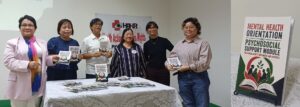
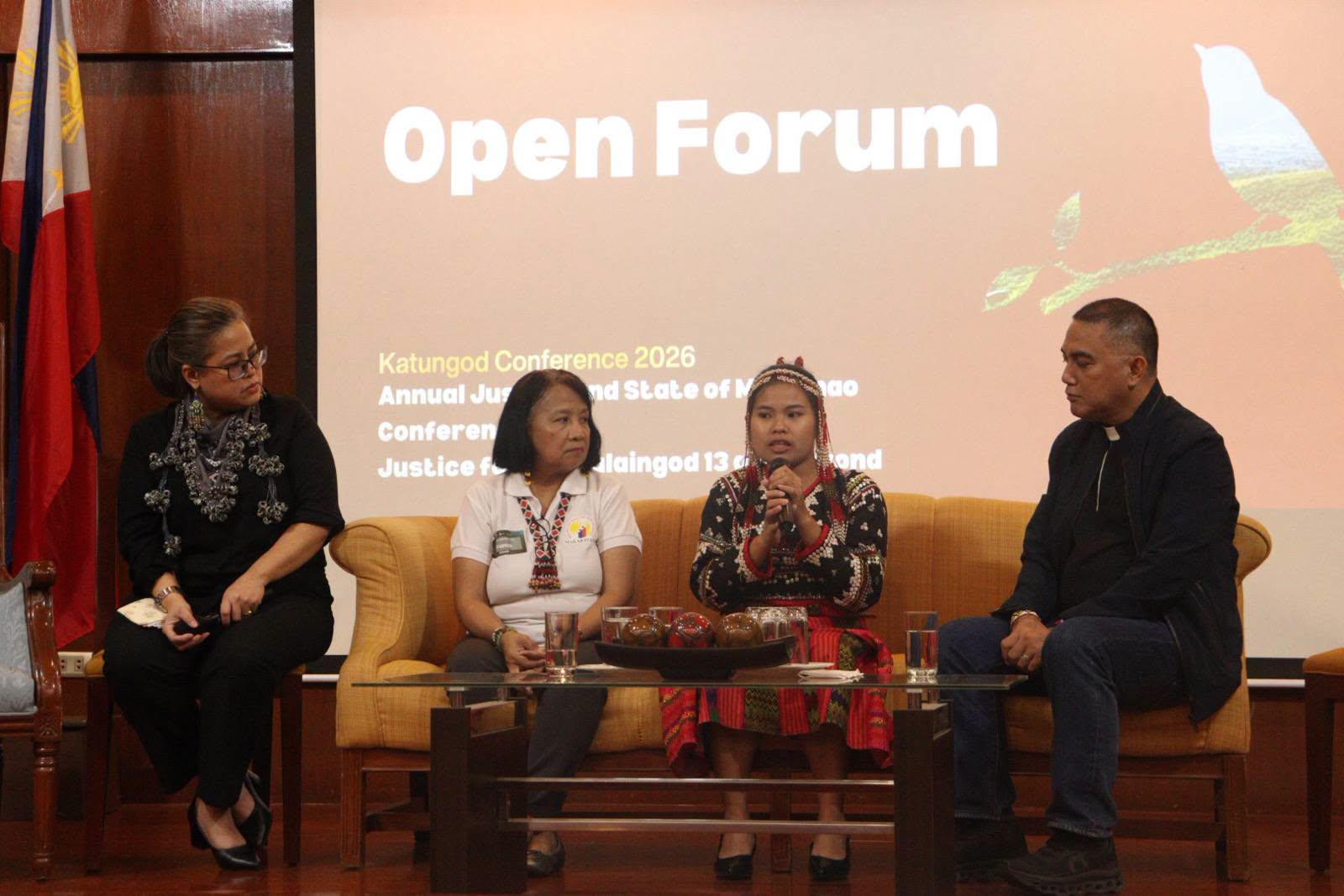
This was pointed out by lawyer Raymond Marvic Baguilat, senior lecturer and lead legal officer of the University of the Philippines (UP) Law Center Institute of Human Rights, during the Katungod Conference 2026 held on July 15 at the UP Diliman College of Law.
Baguilat pointed to the continuing human rights violations affecting Indigenous communities in Mindanao, including usurpation of their ancestral lands and natural resources, unequal access to basic services, and threats to the right to education.
Lumad communities have pushed back against this state abandonment, but in turn faced harassment and state violence.
“The Lumad schools in Mindanao were established for this, to be able to provide education and ensure that the education given to these children would be consistent with their cultural standards,” Baguilat said.
He added that during the Duterte administration, Lumad schools, including those in Talaingod, Davao del Norte experience red-tagging and military and paramilitary harassment.
Talaingod 13
Human rights groups and advocates from all over the country have also intervened in support of Lumad communities, but they have also faced harassment.
In a national solidarity mission in 2018, activists, indigenous peoples leaders, educators, and advocates responded to requests for assistance from Lumad students and teachers in Talaingod, Davao del Norte who were displaced by military operations in the area.
Instead of being recognized for providing humanitarian support, the group was arrested, charged, and was later convicted by the Regional Trial Court in a decision issued on Jan. 15, 2024.
The charged activists, collectively called “Talaingod 13,” are currently facing trumped-up charges under Republic Act No. 7610. It includes former Bayan Muna Rep. Satur Ocampo, former ACT Teachers Rep. France Castro, and 11 volunteer Lumad school educators and advocates.
Angelika Moral, a B’laan youth leader and key witness in the Talaingod 13 case, recounted the group’s experience during their escape from Talaingod and the fear they experienced as they fled.
“Perhaps if they had left us in Talaingod during that time, we don’t know whether we would still be alive or whether we would have made it home safely to our parents,” she said.
Moral also pleaded for the reversal of the Talaingod 13 conviction, urging the public and the courts to listen to the testimonies of the former Lumad students, whom she said are living proof of their teachers’ innocence.
Moral’s testimony echoed the larger issues raised by Fr. Raymond Ambray, convenor of the Save Our Schools (SOS) Network, who said that upholding the conviction of the Talaingod 13 would also justify the enforced evacuations against Indigenous communities.
“To uphold the conviction of the Talaingod 13 is to uphold enforced evacuations, because the Talaingod 13 case did not begin in the courtroom—it began with enforced evacuations as a weapon to suppress communities,” he said.
Moral’s account reflects the continuing challenges and risks faced by Lumads and other Indigenous communities in their ancestral lands.
Displacement of IPs
Datu Rolando Anglao, supreme datu of the Manobo-Pulangiyon of Bukidnon, also shared his community’s struggle to secure recognition of their ancestral domain.
He recounted that after being displaced from their land, many members of their community were left with no choice but to live along the highways of Bukidnon. Despite repeated attempts to obtain the necessary documents from the Land Registration Authority (LRA), he said they have yet to receive a resolution.
“Our mayor does not seem to see us as human beings. It’s as if we are ‘garbage’ – dirty in their eyes. That’s why we continue to live in poverty,” Anglao said.
Meanwhile, Bae Rhoda Calupe of the Talaandig tribe also recounted the pain of being displaced from their ancestral land.
“We had no choice but to leave, carrying nothing but the pain of abandoning our land – the land where we grew up, where we first dreamed, and where we hoped to live in peace,” she said.
The testimonies of the Lumad leaders underscored the continuing struggles of Indigenous communities to defend their ancestral lands, preserve their way of life, and assert their rights amid displacement and other challenges discussed during the conference.
Derived from the Cebuano word katungod, meaning “rights” or karapatan in Filipino, the conference highlighted the need to amplify the voices of the peoples and communities of Mindanao in telling their own stories and asserting their rights.
Carrying the theme “Justice for the Talaingod 13 and Beyond,” the gathering brought together advocates, legal experts, and Indigenous community members to discuss the continuing struggle for justice and accountability in the Talaingod 13 case, as well as broader issues affecting Indigenous communities.